By Franck Essi
On this 10th of April 2025, the anniversary of the creation of the Union of the Populations of Cameroon (UPC), I bow with emotion, respect and gratitude to the memory of those whom I call with admiration: the Men and Women of ‘48, the Ancestors of the Future.
It was in Douala, in a Cameroon placed under UN trusteeship but administered by France, that the UPC was baptized. The context was one of brutal colonial domination, repressive administration, a political order that tolerated no questioning and no deviation from the colonial status quo.
And yet, a courageous and visionary group of men and women rose up. Coming from all social classes, all regions, all cultural and religious backgrounds, they found themselves in the common audacity to hope and the courage to dare to invent a different future.
They said NO to colonization, NO to exploitation, NO to humiliation.
They said YES to true sovereignty, YES to dignity, YES to the freedom of the Cameroonian people.
They laid the foundations for a popular and modern national project
By founding the UPC, they were not just creating a political party: they were giving birth to a movement deeply rooted in the aspirations of the people, structured around four fundamental objectives:
- The reunification of a Cameroon then divided between French and British trusteeship.
- Real independence, i.e. effective emancipation from all forms of foreign political, military, economic and cultural domination.
- Raising the standard of living of the population, through equal access to land, education, health and dignity.
- African unity, seen as the ultimate condition for the sovereignty and collective emancipation of the African continent.
These principles were never mere slogans: they were the concrete expression of rigorous, profound militant work, rooted in the social and political realities of the country.
They gave their all. And the colonial system took everything from them, except their honor.
The colonial response to this popular aspiration was extremely violent, methodical and unparalleled in its ferocity. Large-scale massacres, political executions, systematic torture, mass deportations, slander, bans, historical falsification… The UPC paid dearly for its commitment to the people.
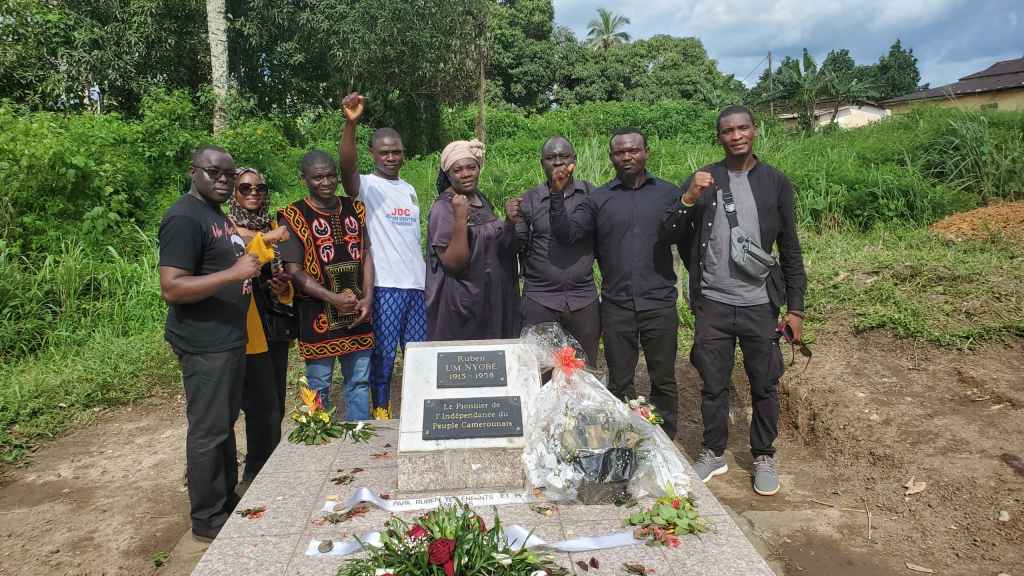
But the flame of resistance never went out. Ruben Um Nyobè, the Mpodol, murdered by the French colonial army in the Boumnyebel forest in 1958, remained loyal until his last breath. Félix Moumié, poisoned in Switzerland. Ernest Ouandié, shot in Bafoussam. Ossende Afana, murdered and beheaded. Marthe Moumié, who died in tragic circumstances. And so many others who paid for their love of their country and its people with their lives.
Even today, between loyalty and betrayal: knowing how to distinguish the true heirs
Today, the name of the UPC is often mentioned. 77 years later, many are those who, in search of easy legitimacy, claim to be part of the UPC. But not all claims to the name are genuine. Now more than ever, we need to distinguish between the continuers and the gravediggers, the heirs and the opportunists, the faithful and the impostors.
Between those who sincerely honor the memory of the movement and those who cynically exploit its history for their own private interests, there is a clear imperative:
- One cannot claim to be part of the authentic UPC while condoning injustice.
- One cannot be heir to the men and women of ‘48 while participating in electoral masquerades and the repression of freedoms.
- One cannot claim to be part of the UPC while colluding with the neocolonial order.
- One cannot invoke Um Nyobè while betraying the people.
- The UPC was never a political commodity: it is a permanent moral and political requirement.
What should characterize true continuators of the UPC
Being an authentic continuator of the UPC today means:
- Acting with integrity, discipline and courage, going against the tide of personal interests and compromises.
- Standing alongside the masses, to organize, train, raise awareness and transform.
- Rejecting tribal, ethnic or racist posturing and defending a pluralistic, pan-African nation based on solidarity.
- Thinking of politics as a duty of emancipation, not as a career.
- Being prepared to sacrifice one’s privileges to serve the common good.
- And above all, never betraying the truth. Even alone. Even against all odds.
Because the UPC was not a label, but a radical commitment. It is a standard of integrity, justice and courage.
The Men and Women of 48 refused to give in, scorned compromise, and taught a lesson in political coherence that is rare in the contemporary history of Africa.
Their commitment was not an attitude. It was a radical choice of integrity, sacrifice and love of the people.
Glory to the Ancestors of the Future, glory to the men and women of 1948
Eternal glory to the builders of the first true Cameroonian utopia.
Glory to the founders of a free, united, just and dignified Cameroon.
Glory to the original UPC, the immortal soul of the Cameroonian people.
The UPC is not dead. It lives on in every free conscience.
The essential task and mission of this generation is to complete the work already begun.
Franck Essi
 franckessi.com