By Franck Essi, February 22, 2025
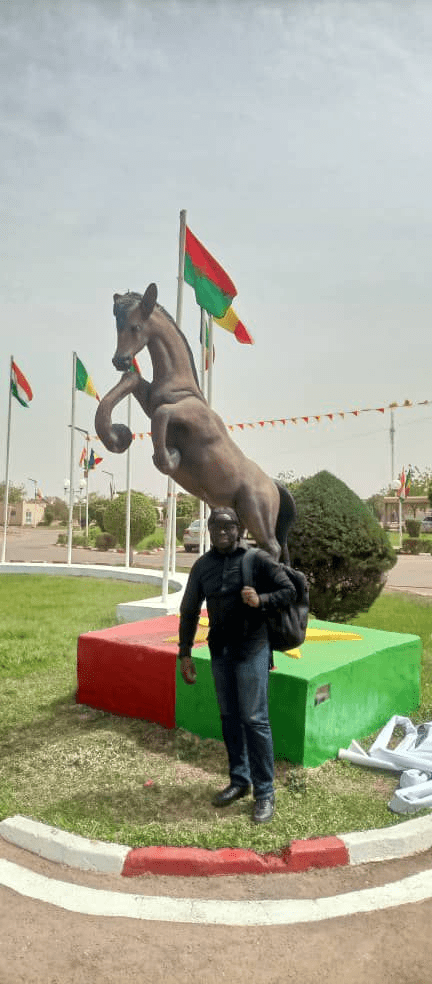
Today, Saturday, February 22, 2025, the 29th edition of FESPACO (Pan-African Film and Television Festival of Ouagadougou) opens.
This event, the most emblematic of African cinema, does not limit itself to celebrating cinematographic art: it projects a vision, shapes African narratives and positions Burkina Faso as an influential cultural actor on the continental and international scene.
In more than 50 years of existence, FESPACO has demonstrated that a cultural event can become a strategic lever of soft power, capable of influencing perceptions, guiding discourse and redefining the place of a country in the collective imagination. However, this journey has not been without challenges and limitations.
I- An African model of cultural influence
FESPACO draws its strength from a combination of key elements.
– The first is institutional anchoring: in Burkina Faso, culture, particularly cinema, has been established as a national priority, supported by a state framework that recognizes the strategic value of this space. This constant support has allowed it to establish itself as a crossroads for African cinemas and the diaspora.
– The second element lies in the festival’s ability to create a sustainable ecosystem. FESPACO is more than a place to show films. It has positioned itself as a film market, a space where filmmakers, producers, distributors, policy makers and cultural actors meet. It is a platform where not only works are negotiated, but also ideas and visions.
– Finally, its diplomatic dimension constitutes a major lever of influence. At each edition, Ouagadougou attracts decision-makers and international delegations, transforming the festival into a strategic space where culture becomes a means of regional and global influence.
II – Despite FESPACO’s consistency, many challenges persist!
While FESPACO has managed to establish itself, its journey is far from being without shadow.
Several criticisms deserve to be highlighted, both to understand the challenges of this model and to draw relevant lessons from it.
– A tension between pan-African ambition and local roots: Although FESPACO claims a pan-African scope, it faces criticism about its ability to truly represent the diversity of African cinema. Some stakeholders believe that certain regions of the continent are underrepresented, and that the selection of works could better reflect the plurality of contemporary African stories.
– Funding and modernization challenges: The festival continues to rely heavily on state support and a few international partners. This financial fragility limits its ability to innovate, particularly in a context where digitalization is profoundly transforming cultural industries. Growing competition with other broadcasting spaces, particularly streaming platforms, highlights the need to adapt its model.
– A still limited economic impact: While FESPACO creates temporary excitement at each edition, its local economic impact remains limited. Transforming the film industry into a sustainable engine of growth and jobs remains a major challenge.
– Debates on artistic freedom and social criticism: In an often sensitive political context, questions remain about the place left for critical works, particularly those that address sensitive themes such as governance, social justice or democracy. Cinema, as a space for protest and reflection, sometimes comes up against the limits imposed by local political dynamics.
III. Cameroon: Between inspiration and adaptation, what can we learn from FESPACO
From this look at FESPACO, several reflections are necessary for Cameroon, which has an impressive cultural reservoir, but whose exploitation remains below its potential.
Rethinking the place of culture in the national strategy
Culture should not be considered solely as a space for entertainment, but as a strategic lever of power and influence.
This implies:
– A clear and coherent cultural policy, integrating cinema as a tool for national and regional influence.
– Innovative financing mechanisms, combining public investment, private partnerships and mobilization of the diaspora.
– The decentralization of cultural initiatives, by involving local authorities to develop a dynamic cultural fabric across the country.
Building an ecosystem adapted to contemporary realities
The current context requires us to think beyond traditional festivals. New technologies and digital platforms open up unprecedented opportunities:
– Develop local digital platforms for the dissemination of Cameroonian cinema.
– Create regional bridges, by collaborating with thriving film industries such as Nollywood or South African platforms.
– Strengthen training by supporting schools specializing in film and audiovisual professions, to develop skills that are competitive on the international market.
Promote a critical and committed cultural space
The power of cinema also lies in its ability to question society.
Cameroon could distinguish itself by promoting spaces where critical works have their place, even when they address sensitive subjects.
This openness would not only strengthen cultural vitality, but also the country’s credibility as a defender of democratic values and freedom of expression.
Use culture as a diplomatic instrument
In an international context where soft power is becoming a form of power as important as economic or military power, culture can be a powerful diplomatic tool.
By transforming its festivals and cultural initiatives into spaces for regional and international exchanges, Cameroon could redefine its position on the African and global stage.
As a conclusion: The power to last, the power to influence
FESPACO’s journey shows that culture, when thought strategically, becomes power. The power to inspire. The power to influence. The power to shape the stories that build the future.
For Cameroon, the lesson is clear: culture is not a luxury, it is a tool of influence, a driver of social transformation and a diplomatic weapon.
What if Cameroon’s future on the African and global stage also depended on its ability to tell its stories?
Of course, all of this is certainly not possible with the current leadership and governance system.
Undoubtedly, a citizen revolution that leads to a refoundation of the State and a new progressive and competent leadership are both the prerequisites and the necessary, although insufficient, conditions for this cultural influence.
Franck Essi
 franckessi.com