By Franck Essi, April 17, 2025
A strategic turning point in the Lake Chad Basin
For nearly a decade, Cameroon’s Far North region has been plagued by an asymmetrical war, marked by persistent armed violence, massive population displacement, and a profound weakening of the economic and social fabric. Factions of Boko Haram and the Islamic State in West Africa (ISWAP) have been conducting harassment, intermittent occupation, predation, and terror operations there, with a devastating impact on local stability.
But two recent developments require us to completely revisit the usual analytical frameworks and to lucidly pose the question of a change of strategic direction.
The first is the use of drones by non-state armed groups, marking an unprecedented technological leap in this theater of operations. The second is Niger’s withdrawal from the Multinational Joint Task Force (MNJTF), revealing the political tensions and structural limitations of an already weakened regional mechanism.
These events, far from being anecdotal, constitute a major turning point. They require a serious effort of analysis, and above all, a desire to rethink the foundations of our national and regional strategy.
As a committed Cameroonian citizen, field observer and active member of several working groups on security dynamics in the sub-region, I propose here a critical reading of the current developments, as well as concrete avenues for reshaping the Cameroonian approach to the persistent threat posed by these armed groups.
A critical reading also prompted by a triumphant and worrying reaction from the spokesperson for the Cameroonian Ministry of Defense dated April 5, 2025. A reaction that appeared to us less like strategic communication than political staging.
👉🏽 Find the statement here: Facebook link
This reflection is not a scientific analysis, and even less a set of exhaustive recipes for dealing with a complex and evolving situation. It is the expression of a concern and a desire to put back on the table, for everyone’s attention, major concerns surrounding a situation that is worrying in more than one way.
To begin, let us understand the issues and dynamics at play.
I. A changing security landscape
To act effectively, we must first understand what we are facing. For more than ten years, the war waged by Boko Haram and ISWAP in the Lake Chad Basin has profoundly changed in nature. It is no longer a simple insecurity. It is a complex, mobile, and entrenched conflict that combines armed violence, social crisis, technological innovation, and a state vacuum.
This section will take stock of the situation: how did this war evolve? Why did armed groups succeed in establishing themselves? And what is the human and social cost for our populations?
Laying these foundations is laying down the real terms of the problem.
1.1 Understanding the driving forces of an asymmetrical war that adapts and takes root
For at least a decade, the Lake Chad Basin region has been one of the African epicenters of a new type of warfare: asymmetric, hybrid, transnational, and multidimensional. What’s at stake there goes beyond armed clashes. It’s a confrontation on the military, social, ideological, and economic levels, waged by groups capable of evolving in response to the pressures they face and the opportunities they encounter.
1.1.1 A critical timeline of threat evolution (2014–2025)
To understand the logic of the armed groups active in the Far North of Cameroon, it is necessary to retrace the main stages of their rise to power.
- 2014 marked the beginning of Boko Haram’s massive incursions. The spectacular kidnappings—the Moulin-Fournier family and Chinese workers—and the attacks on Kolofata heralded an era of extreme violence. The group temporarily occupied several border villages and established its bases in the Mandara Mountains.
- 2015–2016 : Faced with military pressure, Boko Haram fragments. The use of improvised explosive devices (IEDs), suicide attacks, and the emergence of ISWAP reorient its strategy. It enters a phase of dissemination and elusiveness.
- 2017–2018 : Logistical and territorial consolidation becomes a priority. Armed groups impose taxes, control markets, and recruit by force. They target humanitarian convoys and rural routes, demonstrating a deep understanding of the terrain.
- 2019–2020 : The worsening humanitarian crisis culminates in the Nguetchewe attack. Civilians become the primary targets of terror, in a strategy of collective punishment and psychological domination.
- 2021–2022 : ISWAP strengthens its social base after Shekau’s death. The group uses microcredit to recruit, refines its religious discourse, and develops more structured communication, particularly through social media.
- 2023–2024 : Technological innovation enters the picture. Homemade drones appear during the Kerawa attack. Boko Haram increases its lightning strikes while ISWAP refines its hybrid methods of operation.
- 2025 : Technological warfare is declared. In Wulgo, in March, kamikaze drones are used with disturbing precision. The enemy infiltrates military zones, disguises itself, and strikes quickly and hard. The paradigm has shifted.
1.1.2 Decipher the conditions that allowed this rooting
This expansion cannot be understood without identifying the factors that allowed these groups to establish themselves permanently, both in Cameroon and in the rest of the Lake Chad basin.
Among these factors:
- The weakness of state institutions in border areas.
- Chronic economic imbalance and social marginalization of young people, in particular.
- The worsening of ecological stress , particularly with the scarcity of water and land.
- The porosity of borders , facilitating tactical mobility.
- A diffuse religious radicalization , catalyzed by transnational networks.
These combined elements have contributed to creating fertile ground for the establishment of armed groups, which sometimes appear, in the eyes of the population, as alternatives – however violent they may be – to a failing State.
1.1.3 A particularly heavy human and humanitarian toll
The entrenchment of armed groups has generated considerable human, social, and economic costs. Between 2014 and 2025, the consequences are as follows:
- Deaths : between 3,000 and 4,000 dead, civilians and military personnel combined.
- Injured : several thousand, without consolidated data.
- Kidnappings : More than 1,000 people kidnapped.
- Internally displaced persons : 378,000 in 2025, in the Far North alone.
- Nigerian refugees in Cameroon : approximately 120,000.
- Villages destroyed : more than 200.
- Schools closed : approximately 120, depriving 33,000 children of education.
- Military losses : several hundred Cameroonian soldiers killed.
The violence has not only destroyed lives. It has torn apart communities, disrupted ancestral balances, emptied territories, and permanently undermined social cohesion in an already fragile region.
1.2 Kamikaze drones: the new face of terror
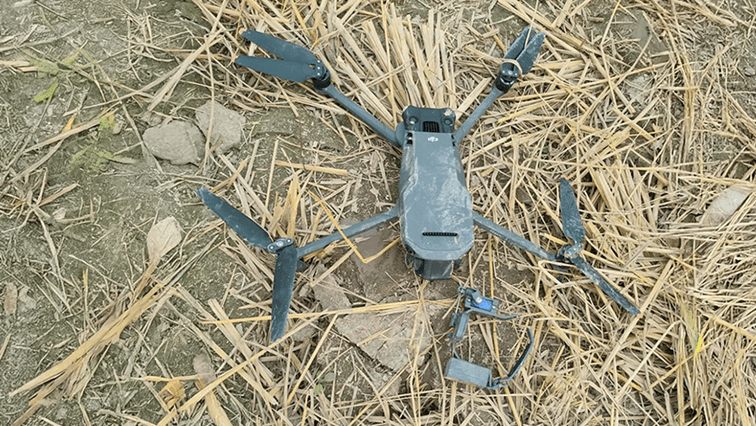
Since the beginning of 2025, a new development has disrupted the already unstable balance: the emergence of suicide drones in the arsenal of terrorist groups. This technological innovation, far from being a gimmick, is profoundly changing the nature of combat and necessitating an immediate strategic review.
1.2.1 A major technological turning point
The Wulgo attack in March 2025 demonstrated the ability of armed groups to hijack civilian drones—particularly the DJI Mavic—and turn them into deadly weapons. Capable of carrying 5 kg of explosives and with a range of 50 km, these drones enable rapid, stealthy, and unpredictable strikes.
According to Crisis Group data, 60% of this equipment comes from the diverted Nigerian civilian market, and 40% from trans-Saharan networks linked to Iran via Sudan.
This technological breakthrough creates a worrying strategic imbalance. Because faced with these drones, Cameroonian forces—poorly equipped for electronic warfare—are helpless. It’s no longer the number of troops deployed that makes the difference, but the ability to detect, anticipate, and neutralize them in real time.
1.2.2 A direct threat to the armed forces
Three major implications arise from this:
- An increase in asymmetric threats , making traditional methods obsolete.
- A technological emergency , requiring investment in jamming, detection and neutralization.
- A redesign of military training , which must integrate air threats into its doctrines.
1.2.3 Increased danger for civilian populations
Beyond the armed forces, it is the populations who pay the highest price:
- Drones can strike civilian infrastructure or densely populated areas , causing mass casualties.
- Their mere presence fuels a climate of fear , disrupting daily life.
- They accentuate economic disorganization , hampering agriculture, trade and education.
1.3 Niger’s withdrawal from the Multinational Joint Task Force: a sub-regional security earthquake
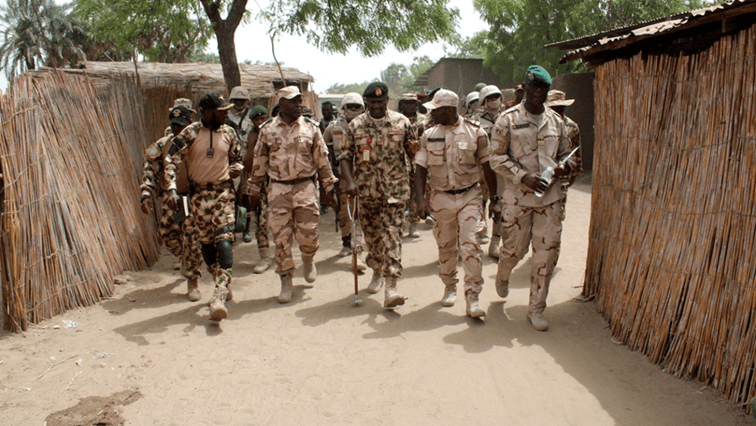
As armed groups advance technologically and adapt their strategies to increasingly hybrid warfare, another phenomenon is further weakening the regional security architecture: Niger’s official withdrawal from the Multinational Joint Task Force (MNJTF). This withdrawal, announced in March 2025, cannot be seen as a simple military realignment. It marks a major diplomatic and operational rupture in the collective fight against armed groups in the Lake Chad Basin.
1.3.1 A joint force built on a fragile balance
To measure the extent of the shock caused by the Nigerien withdrawal, it is appropriate to briefly recall what the MNJTF is, how it is structured and what role it plays in regional security.
Created in 1994 and revitalized in 2015 to respond to the expansion of Boko Haram, the MNJTF is based on a principle of military solidarity between five states: Cameroon, Nigeria, Chad, Niger (until 2025) and Benin (in a primarily logistical role).
Its mandate is based on four pillars: securing affected areas, restoring state authority, humanitarian support, and coordinated armed struggle. The MNJTF is organized into four operational sectors—Mora (Cameroon), Bagasola (Chad), Diffa (Niger), and Baga (Nigeria)—with a central command based in N’Djamena. However, the excessive autonomy granted to each country in conducting its operations has often undermined overall coherence.
Its architecture combines conventional military troops (infantry, artillery, special forces), military police units, and civilian personnel responsible for intelligence, logistics, and communications. In 2024, before the withdrawal from Niger, the force numbered approximately 10,000 personnel.
1.3.2 Niger’s withdrawal: motivations and weak signals
This sudden departure from Niger, although surprising in its form, was in reality announced by a series of weak signals:
- Deterioration of diplomatic relations following the July 2023 coup, particularly with Nigeria and Benin, against a backdrop of mutual mistrust and agenda rivalries.
- Financial blockage , including the European Union’s refusal to pay Nigerien troops within the MNJTF, which complicated their integration into the common chain of command.
- Refocusing security priorities around the protection of strategic national resources, particularly the oil sites in the north of the country and the oil pipeline to Benin, through Operation Nalewa Dolé.
This withdrawal is therefore the result of a triple blockage: political, strategic and financial. It reflects an exhaustion of the current model of regional military cooperation.
1.3.3 A FMM already weakened before the Nigerien departure
However, it would be illusory to believe that the FMM was functioning optimally before this break. Since its relaunch in 2015, it has accumulated dysfunctions:
- Insufficient logistical resources , particularly in land and air transport;
- Excessive reliance on external assistance for equipment and planning operations;
- Recurring financing delays , particularly affecting the payment of premiums and the purchase of basic equipment;
- Doctrinal heterogeneity of member armies , making joint operations difficult to coordinate;
- Lack of intelligence sharing and poor interoperability of communication systems;
- Constant political suspicion , fueled by accusations of duplicity or indirect support for certain armed groups.
Added to these weaknesses are recurring threats of disengagement from Chad, which criticizes other states for their lack of operational solidarity. Niger’s withdrawal is therefore not an anomaly. It is part of a pattern of collective exhaustion.
1.3.4 Concrete repercussions on the security front
The consequences of the Nigerien withdrawal are multiple and immediate. They affect operational capabilities as well as troop morale and the perception of local populations. All other things remaining equal, this withdrawal potentially means:
- The loss of a strategic lock : the Diffa sector constituted an essential buffer against infiltration between Nigeria, Niger and Chad.
- The disorganization of cross-border patrols , particularly in rural areas where the state presence is almost non-existent.
- The reduction in the overall workforce : other contingents must fill the Nigerien absences without logistical preparation or suitable personnel.
- A weakening of regional intelligence , particularly for the monitoring of inter-island movements on Lake Chad.
- An opening of retreat spaces for terrorist groups, who will take advantage of the breaches to relaunch their attack campaigns.
- An increase in the vulnerability of civilians , left without protection in increasingly contested areas.
This triple observation—technological, human, and institutional—highlights a disturbing truth: despite the evolving threat landscape, Cameroon’s response remains stuck in a classic interpretation of the danger. Before considering solutions, we must therefore question the very foundations of our current strategy. This is the subject of the following section.
2. Structural limits of the current approach: the impasse of a military-security strategy
Beyond the observed security and geopolitical developments, analysis of the Cameroonian and regional system for combating armed groups reveals a series of profound structural limitations. These are due as much to the exhaustion of the dominant military model as to the absence of social, economic, political, and humanitarian responses commensurate with the challenges. It is this overall impasse that must now be addressed.
2.1 A strategy focused on force, but generating tensions
From the very first Boko Haram attacks, the Cameroonian authorities’ response has been primarily military. Operations Alpha and Emergence 4 have repeatedly recaptured areas under jihadist control. But they have also been accompanied by abuses: summary executions, arbitrary detentions, and the destruction of villages.
These well-documented abuses have fueled local distrust of the defense forces, sometimes perceived not as protectors, but as aggressors. In some cases, this distrust has paved the way for opportunistic alliances between civilians and armed groups. In other words, pure security logic has sometimes produced the opposite of the intended effect.
2.2 Reintegration mechanisms with little credibility
The creation in 2018 of the National Committee for Disarmament, Demobilization, and Reintegration (CNDDR) was intended to embody the second phase of the process: to offer an alternative to repentant ex-combatants. But this mechanism remains underfunded, poorly coordinated, and lacking in transparency. Less than 15% of registered ex-combatants have received any real support.
Worse still, the legal uncertainty surrounding the status of ex-combatants—between prosecution, detention, or reintegration—stood fear and limited surrenders. The absence of a clear and credible crisis-resolution policy prevents any sustainable de-escalation.
2.3 Forgetting economic and social determinants
The root causes of the conflict—poverty, unemployment, lack of public services, and historical marginalization—are only marginally addressed. In a region where more than 60% of young people are unemployed, armed groups may appear to be the only opportunity for income, or even social advancement.
Less than 10% of counterterrorism budgets are devoted to local development programs. The extreme precariousness of internally displaced persons and the collapse of health and education systems create fertile ground for radicalization.
2.4 Regional cooperation corrupted by state selfishness
The MNJTF, which was supposed to embody the collective response, is today paralyzed by inter-state rivalries. Cameroon prioritizes the sanctuarization of its territory; Nigeria conducts unilateral operations; Chad hesitates; Niger has withdrawn.
Joint operations are rare, intelligence sharing is partial, and national strategies are poorly coordinated . Ultimately , armed groups benefit from these fractures and skillfully exploit border porosities.
2.5 Prevention of extremism still in its infancy
Campaigns to prevent violent extremism (PREV) remain marginal, poorly adapted, and concentrated in urban areas. Barely 20% of the population in the Far North is exposed to them. Rural areas, the main targets of jihadist recruitment, are almost completely ignored.
Furthermore, extremism is going digital. Since 2023, French-language jihadist content on social media has exploded. The state has neither a digital strategy nor a structured response capacity.
2.6 Underestimated environmental factors
The degradation of Lake Chad—90% of its surface area has been lost in 60 years—is generating growing conflicts between farmers, fishermen, and herders. These tensions, exacerbated by water shortages, desertification, and competition for land, are being used by armed groups as a lever for recruitment and territorial control.
In short, at the very moment that armed groups are innovating technologically and establishing themselves socially, the regional response is disintegrating. This growing imbalance requires a profound overhaul of the current framework. The Lake Chad Basin can no longer rely on rigid security cooperation, under-equipped and undermined by national rivalries. We must now consider a new form of regional coalition: more flexible, more agile, and truly focused on the realities on the ground.
It is a comprehensive overhaul – political, social, environmental – which is now emerging as the only credible path towards sustainable security in the Lake Chad Basin.
3. Towards a new strategic approach: for a lucid, ambitious and inclusive overhaul
With the limitations of the current approach recognized, it is urgent to propose a complete reorientation of the paradigms for combating violent extremism in the Lake Chad Basin. This involves not only adjusting existing instruments, but also rebuilding a security strategy based on local roots, technological agility, social justice, and regional diplomacy.
3.1 Rethinking regional cooperation: from the MNJTF to a rethought security architecture
Niger’s withdrawal demonstrates the extent to which current cooperation models are fragile. A new generation of subregional mechanisms must emerge, more flexible, better funded, and geared toward real operational needs. This requires:
- The revision of the mandate and functioning of the FMM, or the creation of a new, more flexible framework.
- The establishment of coalitions with variable geometry, including coastal countries and those of the central Sahel.
- The revival of security diplomacy within ECCAS and the African Union, with an increased role for sub-regional institutions.
- A shared regional intelligence and predictive analysis platform, connected to the realities on the ground.
3.2 Modernizing defense capabilities: bringing states into 21st-century warfare
The growing sophistication of armed groups requires an urgent adaptation of defense capabilities. It is imperative to invest in:
- Electronic warfare technologies (anti-drones, jammers, tactical sensors);
- Low-cost drone and satellite surveillance;
- Advanced training in cyber defense, counterinsurgency and human intelligence;
- Technological partnerships with countries with proven expertise (Israel, Türkiye, Brazil, India).
3.3 Rehabilitating the link between the State and communities: winning the social war
An asymmetrical war cannot be won without the people. It is time to implement in a real, effective, efficient and scaled manner:
- Massive youth employment and vocational training programs in at-risk areas.
- A clear and equitable policy for the reintegration of ex-combatants, with psychosocial support and economic assistance.
- Targeted investment in social infrastructure (schools, health centers, water and electricity networks).
- The promotion of inclusive local governance, involving traditional leaders, associations, women and young people in the co-construction of security.
3.4 Include peace in a long-term political and diplomatic vision
Finally, beyond immediate risk management, we must lay the foundations for a peaceful future. This involves:
- A policy of structured dialogue with affected communities and non-terrorist groups that can be reintegrated.
- The establishment of transitional justice mechanisms and symbolic reparations.
- The development of a renewed social contract for marginalized regions.
- A strategic repositioning of Cameroon as a driving force for regional peace.
These four areas of focus—diplomatic, technological, social, and political—are neither mutually exclusive nor sufficient. However, they provide a basis for reflection for those who wish to see a more effective and fairer response to the crisis. It is still necessary to consider the concrete conditions for their implementation. This is the subject of the final part of this reflection.
IV. Implementation of solutions: between real constraints and levers for success
While it is relatively easy to state principles and propose courses of action, their practical implementation always encounters difficulties. Successfully changing course requires not only identifying existing obstacles, but also creating the conditions for a possible shift. The following is not intended to provide an exhaustive list of obstacles, but rather to outline points of vigilance for anyone seriously considering this transformation process.
4.1 Political and institutional obstacles: overcoming system inertia
The first difficulty lies in the frequent absence of genuine political will. Too often, announced reforms remain meaningless, absorbed by administrative delays, jurisdictional conflicts, and window dressing. Rivalries between institutions and power struggles within the security apparatus make any long-term strategic coordination difficult.
Creating a dynamic of real transformation then requires strengthening the legitimacy and coherence of the political conduct of the reform, based on clear, inclusive and continuous steering mechanisms.
4.2 Financial constraints: building strategic autonomy in a context of dependence
Security and social policies in conflict-affected regions are largely dependent on external aid. Yet, this dependence often reduces states’ room for maneuver and limits their ability to develop solutions rooted in their contexts.
Credible implementation requires the search for alternative financing, in particular through fairer local taxation, appropriate public-private partnerships, and above all, better governance of available public resources.
4.3 Distrust of populations: rebuilding a relationship between the State and marginalized territories
One of the main weaknesses of state action in crisis zones lies in the breakdown of trust between institutions and citizens. This divide fuels hostility, inaction, or partial adherence to alternative, sometimes violent, approaches.
It is not just a matter of » involving communities » as the slogans would have it, but of restoring meaning to public presence through open forms of local governance, through regular consultation mechanisms and through a real effort to recognize wounded memories.
4.4 Social and ecological vulnerabilities: transforming fragilities into foundations of resilience
The issues of poverty, unemployment, educational decline, and environmental crisis cannot be considered merely aggravating factors. They are structural factors of the conflict itself. Any crisis exit strategy that ignores them would be doomed to failure.
Creating the conditions for lasting success requires making these vulnerabilities a point of support for reconstruction, by approaching them no longer as emergencies to be extinguished, but as political priorities to be addressed over the long term.
Thus, the success of any transformation will not only lie in the relevance of ideas or the power of means, but in the ability to build a political, institutional, social and territorial framework conducive to their maturation. It is under this condition that the principles mentioned above can hope to be embodied in a fairer, more effective and more humane security policy.
Finally, there is only one imperative: change course to break the cycle.
The fight against Boko Haram, ISWAP, and other armed groups in the Lake Chad Basin can no longer be limited to a series of ad hoc military responses. The challenges posed by the use of drones, the disintegration of the MNJTF, the chronic humanitarian crisis, and the breakdown of social ties require a clear change of direction.
This change of direction must be based on a clear analysis, a strong political will, and a collective mobilization of national, local, and international actors. This is not only about the security of the Far North, but also about the stability of Cameroon and the region as a whole.
The time has come to move away from the logic of perpetual war and into that of intelligent, just and sustainable reconstruction.
The key question, then, is: can or will the political and military leaders of the Lake Chad Basin region rise to these challenges and demands?
One would be tempted to answer: only the future will tell us.
To which we add: the best way to predict the future is to act in the present to influence it to the best of our abilities and means!
Notes on the author
Franck Essi is the Secretary General of the Cameroon People’s Party (CPP) and one of the co-leaders of the Stand Up For Cameroon (SUFC) movement. He is an analyst of economic and governance issues. He currently works as a Senior Consultant at STRATEGIES!, a firm specializing in Leadership & Management. He is also a human rights defender and member of several working groups and initiatives documenting violence and human rights violations in Cameroon’s crisis-hit regions (North West, South West, and Far North).
About the sources
In addition to the author’s own thoughts and direct work, this reflection is based on several sources, a non-exhaustive overview of which is given below:
http://www.eiforces.gov.cm/wp-content/uploads/2021/10/VIGIE-007-VF.pdf
 franckessi.com