By Franck Essi
—
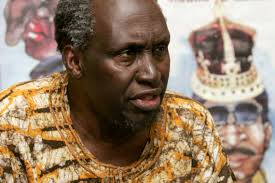
Ngũgĩ wa Thiong’o was not just a writer. He was a trailblazer. A radical thinker. An architect of an Africa freed from mental shackles. His work, often confined to the shelves of literature and comparative literature, is in fact a strategic gold mine for all those seeking to rebuild our development models.
As the continent is caught in the grip of debt, technological dependence and neoliberal standardisation, it is both urgent and beneficial to return to his insights. Here are five key ideas from Ngũgĩ wa Thiong’o for building a rooted, dignified and sustainable African development.
—
1. Take back control of our languages, so we can think from our own world
For Ngũgĩ, language is the matrix of development. It is the seat of the imagination, the vehicle of knowledge, the tool of transmission. A people who think, plan and innovate in an imported language develop solutions for another world, according to the logic of another perspective.
Yet across the continent, development policies are written in English, French or Portuguese, often clumsily translated into local languages, without taking into account indigenous mental frameworks. The result is disconnect, inefficiency and disempowerment.
🔹 Ngũgĩ’s lesson: invest heavily in technical, economic, administrative and scientific translation into African languages. Train bilingual elites with deep roots in their communities. Elevate local languages to the status of tools for governance and innovation.
—
2. Decolonise educational programmes to train builders, not imitators
Ngũgĩ denounced colonial schools not only for their symbolic violence, but also for their inefficiency. In them, Africans learn to recite models, adapt to external norms and dream of other places.
Sustainable development, in his view, requires schools that reconnect students with their territory, their languages, their real needs and their communities. Schools that break down barriers between traditional and modern knowledge. Schools that teach cooperation, critical thinking and creativity.
🔹 Ngũgĩ’s lesson: completely revamp our educational curricula in light of local challenges. Link education to agriculture, the social economy, justice and African history. Reverse the hierarchy between so-called ‘traditional’ and ‘modern’ knowledge.
—
3. Rehabilitate African cultural imaginaries as economic levers
Ngũgĩ insisted that development begins with a revaluation of the imagination. Yet Africa consumes foreign culture en masse and neglects its own. However, African cinema, music, textiles, crafts, spiritualities, culinary practices and cosmetics are all untapped economic resources.
Africa does not need to copy Silicon Valley. It must create its own hubs of innovation based on its own narratives, its own aesthetics and its own cosmogonies.
🔹 Ngũgĩ’s lesson: create an endogenous creative economy based on African cultural expression. Massively fund African artists, storytellers, weavers and video game developers. And build a strong pan-African cultural industry.
—
4. Free African intellectual discourse from the yoke of Western academia
Another of Ngũgĩ’s obsessions was the monopoly of academic knowledge by the global North. Africans are reduced to ‘informants’ in research, their concepts are discredited, and their approaches are dismissed as ‘empirical’. Major journals, universities and publishing houses still filter access to intellectual recognition.
For truly African development, policies must be inspired by locally produced thinking, with our criteria, our urgencies, our words.
🔹 Ngũgĩ’s lesson: fund decolonised African research centres, promote local scientific publishing, demand that public policies be based on African researchers. Create an ecosystem of sovereign knowledge.
—
5. Restoring social justice as a pillar of development
Ngũgĩ was a lucid but undogmatic Marxist. He believed deeply in social justice, equal access to resources, and popular participation in economic choices. He denounced a neocolonial Africa where a minority elite captures resources while speaking on behalf of the people.
African development that is true to its principles cannot be built on such glaring inequalities. People, community and dignity must be put back at the heart of growth policies.
🔹 Ngũgĩ’s lesson: build a sharing economy. Tax excess, support cooperatives, promote a solidarity economy, protect common goods. And make development a collective, participatory, popular project.
—
What we can take away: Never again think about development without liberating the mind
Reading Ngũgĩ today is not about delving into militant archives. It is about responding to an urgent need. The urgent need to think for ourselves. The urgent need to make room for our languages, our cultures, our knowledge, our ways of life. The urgent need to wrest development from technocracy and turn it into a project for collective emancipation.
Ngũgĩ did not leave us answers, but signposts. It is up to us to turn them into bridges, policies and priorities.
Decolonising the mind, he said, means refusing to enter the future with the chains of the past.
It is up to us to dare to break with the past. It is up to us to finally build an Africa from Africa.
Franck Essi
#WhatIBelieve
#TurnOnOurBrains
 franckessi.com