By Franck Essi
There are concepts that disturb, that shake you up, that leave you reeling. The concept of the banality of evil, coined by Hannah Arendt, is one of them. It does not simply add a chapter to contemporary political philosophy. It forces us to face a chilling truth: horror does not always come from monsters, but from ordinary men and women. Normal, polite, well-mannered people who obey, adapt and carry out orders.
Arendt is not a theorist of evil in the absolute sense. She does not write about demons, but about bureaucrats. When she attends the trial of Adolf Eichmann, the high-ranking Nazi official responsible for the logistics of the deportation of millions of Jews, she does not find a sadistic executioner. She finds a dull man, without depth, without hatred, without passion. A man who ‘did not think.’ A zealous civil servant who repeated, ‘I was only obeying orders.’
And that is what is so frightening: evil can be committed not out of cruelty, but out of conformity. It can be accomplished without rage, without hatred, without even awareness. It becomes a job, a task, a procedure. A routine.
What Arendt calls the banality of evil is this ability of totalitarian systems – but also of cold bureaucracies, indifferent regimes and dehumanised administrations – to turn crime into a function. To produce men and women capable of killing, oppressing and harming… without ever feeling responsible. Without even asking themselves questions.
And what about us?
It would be wrong to believe that this idea only applies to Nazi Germany. Contemporary Africa is full of post-colonial Eichmanns. State agents who torture without remorse. Magistrates who hand down unjust sentences with a smile. Doctors who let people die because of a lack of resources but also because of indifference. Police officers who extort money as if they were filling out a form. Civil servants who sign unjust orders saying, ‘The boss told me to.’
In our administrations, in our barracks, in our ministries, in our prefectures, in our courts, in our political cells… How many absurd, inhuman, arbitrary decisions are justified not by malice, but by routine? How many lives are broken in the name of service? How many atrocities are committed because ‘that’s the way it’s done’?
The banality of evil is also when a journalist or peaceful activist is arrested without a second thought. When medical care, a grant or justice is denied because a stamp is missing. When a fictitious contract is signed, when an unjust order is carried out, when a wicked law is enforced, without ever asking whether it is right. Whether it is humane.
To think is to resist
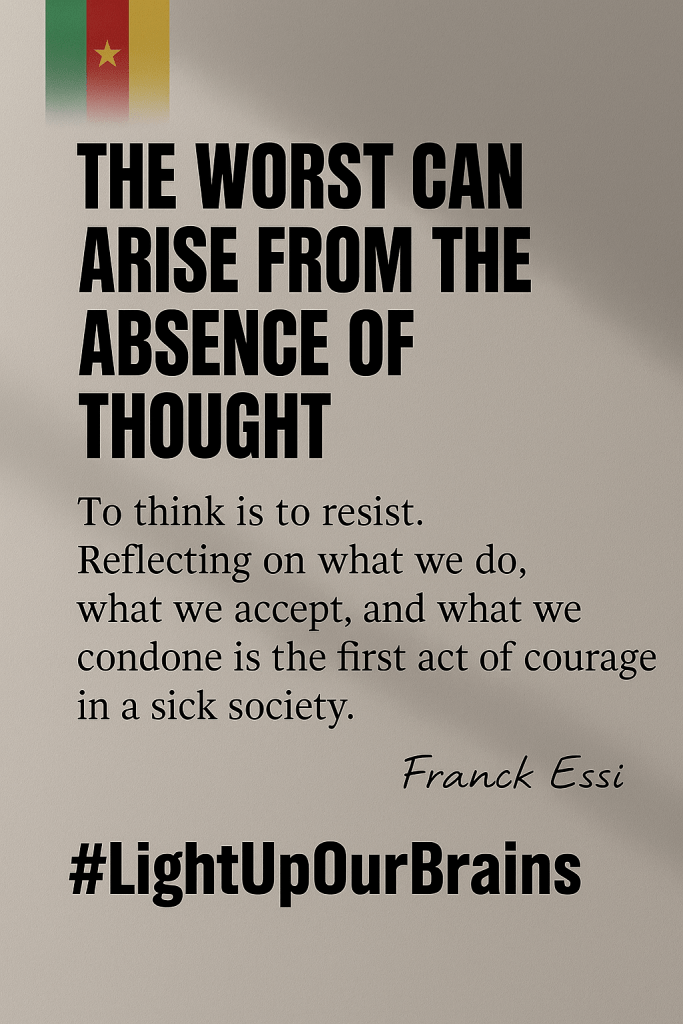
Arendt does not give us an excuse. She gives us a warning. It is not Eichmann she wants to understand. It is us. She wants to remind us that the worst can arise from a lack of thought. That to think is to resist. That reflecting on what we do, what we accept, what we condone, is the first act of courage in a sick society.
She tells us: Do not believe that you are safe. Evil does not need monsters. All it needs is indifference. Obedience. A lack of responsibility.
That is why we must raise awareness. We must educate citizens who think. Who question. Who sometimes disobey. Not for the sake of disorder, but in the name of dignity. Of humanity.
It is my firm belief that the banality of evil is a mirror.
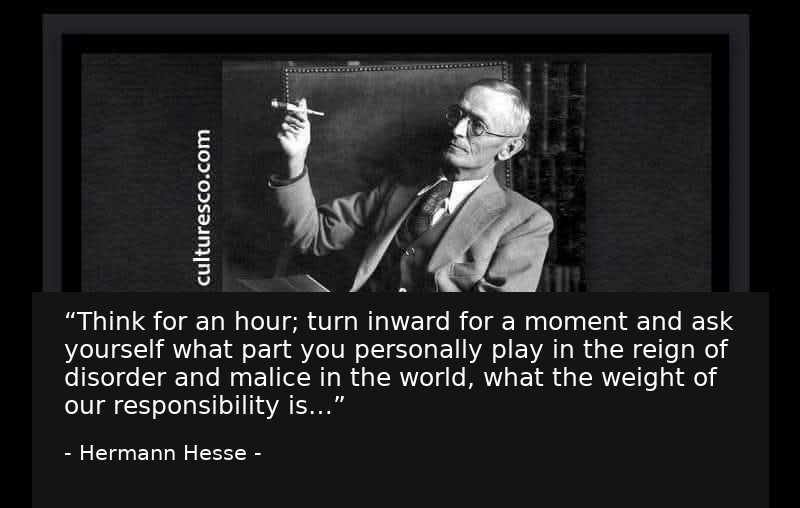
It forces us to look at ourselves and ask: What about me? Where am I complicit through my passivity?
Where do I allow the unacceptable to happen in the name of comfort, silence, fear?
Rebuilding society may start here: by no longer trivializing what dehumanizes us.
#IdeasMatter
#WeHaveChoices
#WeHavePower
#Let’sTurnOnOurBrains
 franckessi.com