By Franck Essi
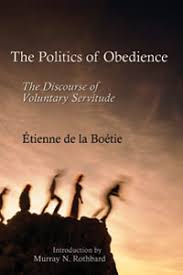
“Resolve to serve no more, and you are free.”
— Étienne de La Boétie
—
A Nation Numbed by Submission
In Cameroon, the wind of resignation has been blowing for so long that it now feels like the country’s natural climate. The authoritarian architecture built over four decades has succeeded in disabling the most basic reflexes of collective indignation.
And yet, beneath this apparent national lethargy, something is stirring. Since the electoral masquerade of October 2025, a new phase of crisis has begun — one marked by an increasingly irreversible rupture between society and the regime in power.
This fracture did not begin in 2025. It is rooted in a long continuum of contempt, injustice, and brutality. But it is deepening, spreading, reaching critical thresholds.
Can one still obey without betraying?
In authoritarian regimes, submission is portrayed as virtue. Yet in certain political configurations, obedience becomes a social crime, and disobedience an ethical imperative.
The real debate, therefore, is not between order and chaos, legality and delinquency — but between servitude and freedom, dignity and resignation, civic death and democratic awakening.
Faced with the confiscation of politics, the generalization of arbitrariness, and the institutionalization of fear, there can be no way out without structured, conscious, and assumable civil disobedience.
—
To Obey Injustice Is to Serve It
Contemporary tyranny no longer wears a uniform. It hides within the machinery of everyday life, disguised as “peace,” “unity,” or “order.”
In Cameroon, it conceals itself behind slogans of peace, speeches on unity, trials for “disorder,” and calls for calm.
But the truth is bare: a locked system, silenced opponents, a subservient judiciary, domesticated media, and an infantilized people.
In such a context, obedience is no longer neutral.
It becomes an active participation in the perpetuation of injustice.
When public officials falsify results; when judges validate mock trials; when journalists repeat the regime’s lies; when citizens denounce their neighbors for peaceful protest — obedience itself becomes the tool of evil.
As Hannah Arendt taught through the banality of evil, horror is not made possible by monsters but by ordinary individuals who hide behind rules and orders — refusing to confront their own conscience.
This is the logic at work in every society where legality outweighs legitimacy and discipline replaces justice.
—
To Disobey Is to Stand Upright
Against this internalized servitude, civil disobedience emerges as an ethic of responsibility.
It does not mean violence or destruction; it means refusing to cooperate with oppression, withdrawing from lies, and engaging in non-violent acts that restore the meaning of citizenship.
Thoreau refused to fund slavery and war.
Gandhi broke the salt monopoly of the British Empire.
Martin Luther King Jr. defied segregation.
Nelson Mandela chose prison over compromise.
Their power lay not in anger but in the harmony between conscience and action.
Civil disobedience is a quiet force of transformation, a radical but non-violent refusal — a way of saying: “I am human; therefore, I cannot participate in your inhumanity.”
—
In Cameroon, Submission Has Become a State Culture
For decades, Cameroonian society has been trained to obey.
At school, one learns to be silent.
At university, docility is rewarded more than critical thought.
In public service, loyalty to orders outweighs intelligence.
In politics, dissent is suffocated.
In churches, submission is preached as virtue.
The result: a fractured, paralyzed people who confuse stability with stagnation, loyalty with servility, silence with wisdom.
Every challenge is seen as a fault; every protest, a threat.
And yet, the evidence is clear:
– Elections are rigged, and everyone knows it.
– Institutions have lost credibility, and everyone admits it.
– Public services are collapsing, and everyone suffers.
– Misery spreads while the oligarchy prospers.
But in a cruel inversion, those who denounce are punished, while those who obey are rewarded with medals.
—
Peace Without Justice Is Only a Lid on a Volcano
The regime has made “peace” its supreme dogma.
It brandishes it as a sacred word to silence revolt.
But what kind of peace is this?
A military peace in the Northwest and Southwest?
A cemetery peace in the Far North?
A peace built on fear, unemployment, and exile?
Peace is not the absence of noise; it is the presence of justice.
Where justice retreats, peace becomes hypocrisy.
Behind the official discourse, Cameroon is a pressure cooker. Frustrations build up, humiliations pile on, anger brews, hope fades.
Obedience has become the last remaining pillar of the system — a reflex forged by habit, trauma, and fear.
But to keep obeying in order to survive is to stop living altogether.
—
Civil Disobedience as Moral Re-Armament
Civil disobedience is not a miracle cure, but it is a necessary passage to break the cycle of voluntary servitude.
It can take a thousand forms:
– Refusing to take part in rigged elections.
– Refusing corruption, even under pressure.
– Refusing to relay the regime’s lies.
– Refusing to normalize state violence.
– Refusing to betray one’s conscience.
To disobey is not to reject the Republic; it is to reject its parody.
It is to remind all that law cannot justify injustice, and that legality is only valid when it protects humanity.
—
Re-Politicizing Obedience: From Zeal to Conscience
We must now politicize obedience itself.
What does it mean to “obey” a regime that violates the Constitution, tramples on rights, and kills alternation?
What is the worth of an obedience that feeds impunity, normalizes violence, and suffocates thought?
In such contexts, obedience is no longer neutral — it is ideological, political, and destructive.
The challenge before us is to rebuild a collective conscience capable of distinguishing order from justice, fear from prudence, form from substance.
—
My Conviction: It Is Urgent to Disobey in Order to Rebuild
In the face of political decomposition, civil disobedience represents a reawakening of meaning.
It is a breach in the wall of cynicism, a light in the night of renunciation.
It says: society is not dead, consciences are not all extinguished, and the future is not confiscated.
To disobey is to refuse the unacceptable.
It is to refuse to be the instrument of one’s own oppression.
It is to reclaim one’s place in history.
Cameroon will not be saved by electoral illusions or by deals among weary elites.
It will be saved by courageous, lucid, non-violent citizen mobilization — ready to disobey in order to rebuild.
For in regimes where injustice is law, disobedience is an act of loyalty to the nation.
And in times of moral confusion, to obey blindly is to die slowly.
#IdeasMatter
#WeHaveAChoice
#WeHaveThePower
#LightUpOurBrains
#CivicEducation

 franckessi.com